Thomas “Wags” Wagner: Building Players, Shaping Leaders
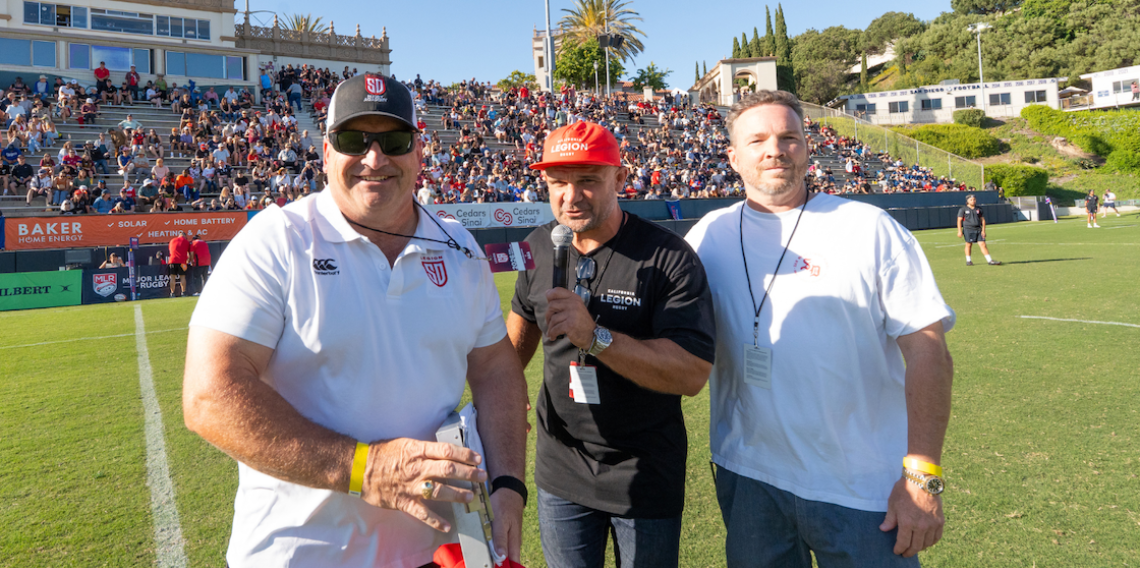
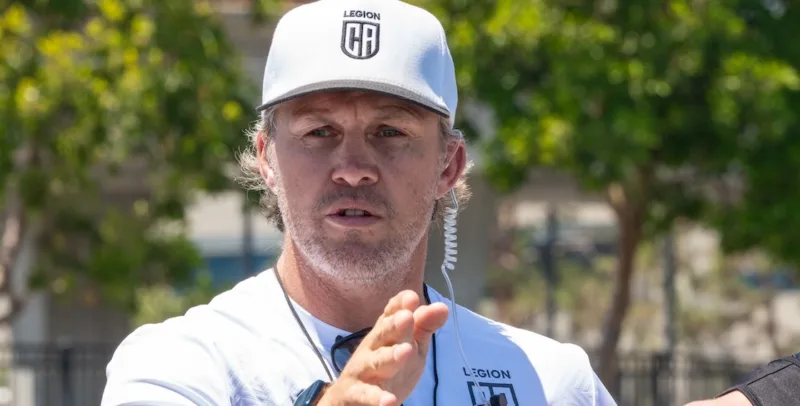
California Legion’s Rugby Hero program shines a light on the people who have poured time, energy, and passion into growing the game and strengthening the community around it. Thomas “Wags” Wagner is one of those people.
For nearly three decades, Wagner has lived and breathed rugby. His journey has taken him across the world as a player, coach, and manager, but what defines him most is not where he has been. It’s what he continues to build. Today, his focus is firmly on the next generation, helping young players develop not only as athletes, but as confident, capable individuals.
“I do it because I love it,” Wagner said. “This is my version of golf. It’s how I choose to spend my time.”
A Global Game, A Lifelong Journey
Wagner’s rugby story began in 1996 at the U.S. Naval Academy, where he played his first match during a Thanksgiving break tournament in New York City. His final match came nearly two decades later, also in sevens, representing the All-Marine team. In between, his career unfolded across continents, shaped by both rugby and military service.
“I’ve played, managed, or coached in about 30 countries,” he said.
As a Marine, Wagner was stationed around the world, and wherever he went, rugby followed. From Bahrain to Japan, from the Pacific to the Middle East, the game became a constant thread in a life defined by movement and service. When he was based in San Diego, he played for Old Mission Beach Athletic Club during the Super League era, winning multiple national championships and competing at the highest level available in the United States at the time.
Even then, though, his role in the game was beginning to evolve. Coaching and leadership were already becoming part of his identity, setting the stage for what would come next
What Separates Good from Elite
Wagner’s transition from player to leader happened quickly. The day after his final match in 2013, he stepped into a new role as General Manager of the U.S. Olympic rugby team. It was a shift that gave him a completely different perspective on the game.
In that role, he was responsible for making difficult decisions, including informing players when they hadn’t made the team. It wasn’t easy work, but it sharpened his understanding of what separates good players from elite ones.
“At that level, the biggest thing I look for is defense,” he said. “You have to play defense better than you play attack.”
For Wagner, the fundamentals are not what set players apart. At the highest level, everyone can pass, run, and catch. What matters is effort, positioning, and a willingness to do the hard work that often goes unnoticed. The ability to track back, make tackles, and fight for turnovers is what defines a player’s ceiling.
“That’s the difference,” he said.
Building More Than Players
Today, Wagner’s work is centered on development, but not in the traditional sense. While he is deeply invested in helping players improve on the field, his broader goal is to shape who they become off it.
Through international tours and academy programs, he creates opportunities for young athletes to experience rugby at a global level. In the past year alone, his teams have traveled to places like Portugal, Australia, Fiji, and Italy, competing against top programs and immersing themselves in different cultures.
“We want the players to be immersed in the culture,” he said.
In Portugal, players explored Lisbon, spent time with their families, and competed in a 38-team tournament, reaching the final against one of Ireland’s top programs. The experience challenged them, but it also expanded their perspective.
Wagner believes that those moments matter as much as anything that happens on the scoreboard.
Confidence Through Connection
What sets Wagner’s approach apart is the emphasis he places on personal growth. He teaches players skills that extend beyond rugby, focusing on communication, confidence, and respect.
One of his simplest rules captures that philosophy.
“Every game day, you meet three new people,” he said.
At first, it feels like a small task. But over time, it builds confidence and connection. Players learn how to introduce themselves, make eye contact, and engage with others. They begin to understand that rugby is more than a sport. It’s a network, a community, and a shared experience that spans the globe.
“Rugby is a global village,” Wagner said. “You end up about one degree of separation from almost everyone in it.”
He even extends that mindset to fans, encouraging them to step outside their comfort zones and connect with the people around them. For Wagner, the growth of the game depends on those interactions just as much as what happens on the field.
Redefining Success
For Wagner, success is not measured by wins alone. It’s measured by development, opportunity, and impact.
Since 2019, he has helped guide 72 players to All-American honors. Several have already moved into national team pathways, with more continuing to develop. But he’s quick to point out that not every player will reach the highest level, and that doesn’t diminish their value.
“If three out of 33 make a future World Cup team, I’ve done my job,” he said.
The rest still matter. They contribute to the environment, push their teammates, and play a role in building something larger than themselves. Rugby, like any team sport, depends on that collective effort. It’s a perspective rooted in humility and understanding, one that reinforces the idea that everyone has a role to play.
“A quarterback is nothing without an offensive line,” Wagner said.
Wagner doesn’t shy away from difficult experiences for his players. He believes that growth comes from being tested, not from dominating weaker competition.
“You learn more from those losses than from easy wins,” he said.
Facing top programs from around the world forces players to confront their weaknesses and raise their level. It gives them a clear understanding of what it takes to compete at the highest level, while also building resilience and perspective.
A Life of Service
At the core of Wagner’s work is a deep sense of purpose shaped by a lifetime of service. From the Naval Academy to a 20-year military career, leadership has always been central to who he is. Today, that calling has evolved into something new. His focus is on preparing the next generation, not only for rugby, but for life.
“My focus is helping form tomorrow’s leaders,” he said.
That perspective shows up in everything he does. The international tours, the attention to detail, the emphasis on connection and confidence. Wagner measures success in ways that go beyond wins or accolades. He sees it in how players carry themselves, how they grow, and how they support each other.
“I’ve never had a player come back from a tour worse,” he said. “They always come back better.”
Better players, certainly. But more importantly, better people.
He’s also quick to recognize the role others play, especially the parents who make these opportunities possible. For Wagner, they are the real heroes behind the scenes.
That mindset defines his legacy. It is not built on a single moment, but on years of mentorship, opportunity, and impact. It lives in the players he has guided, the connections he has created, and the community he continues to strengthen.
The work is far from finished. And that's exactly how he likes it.